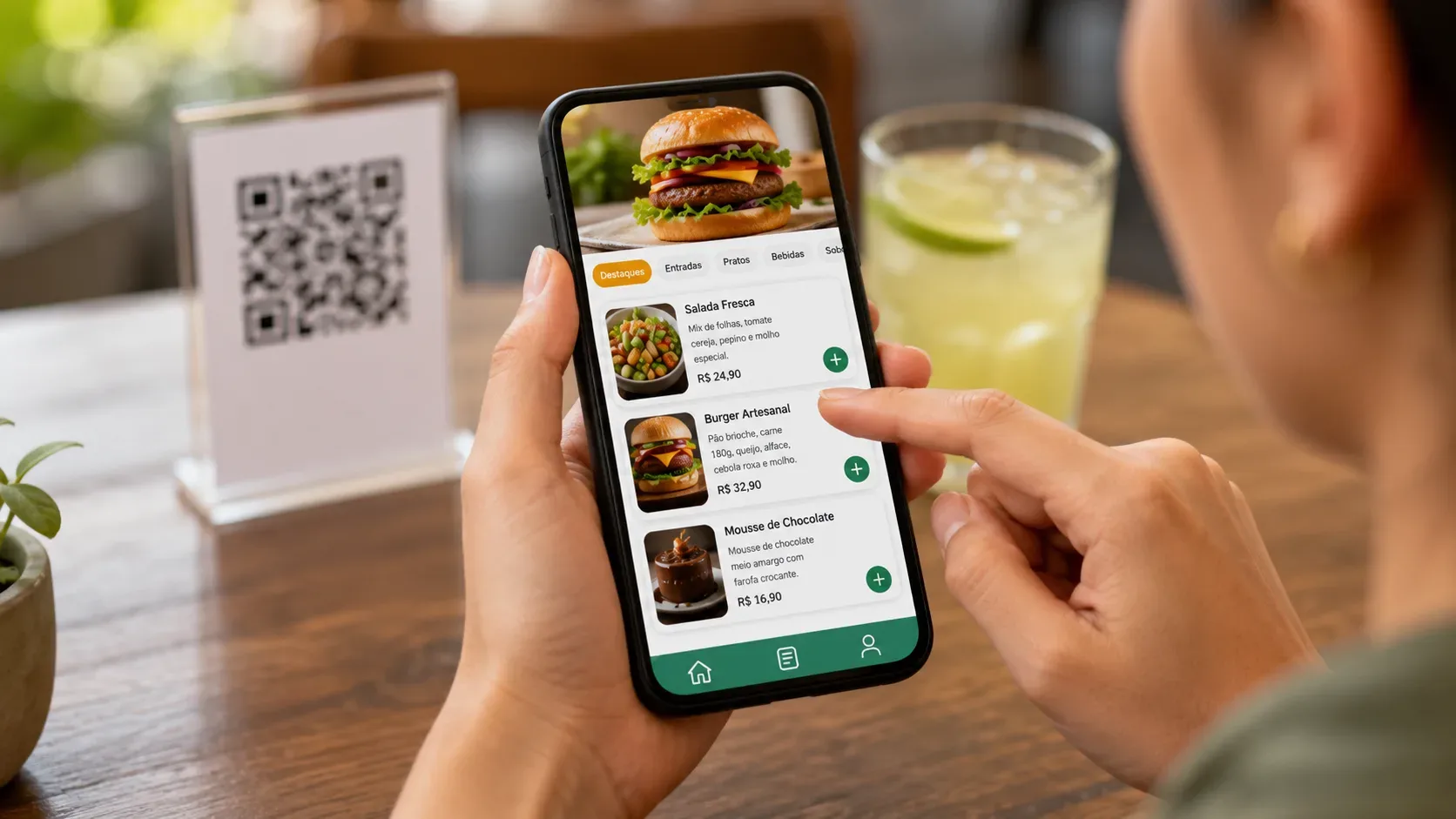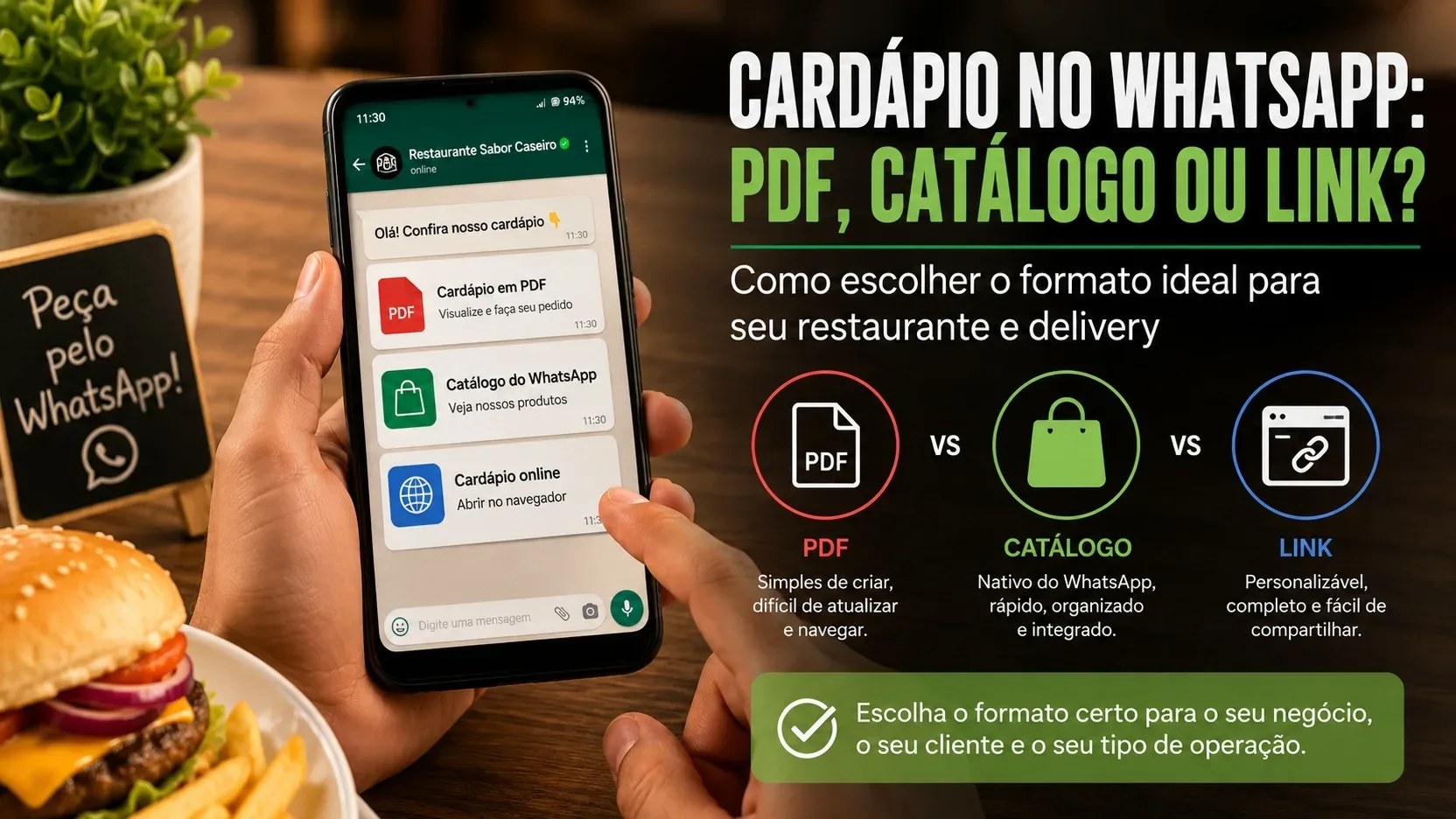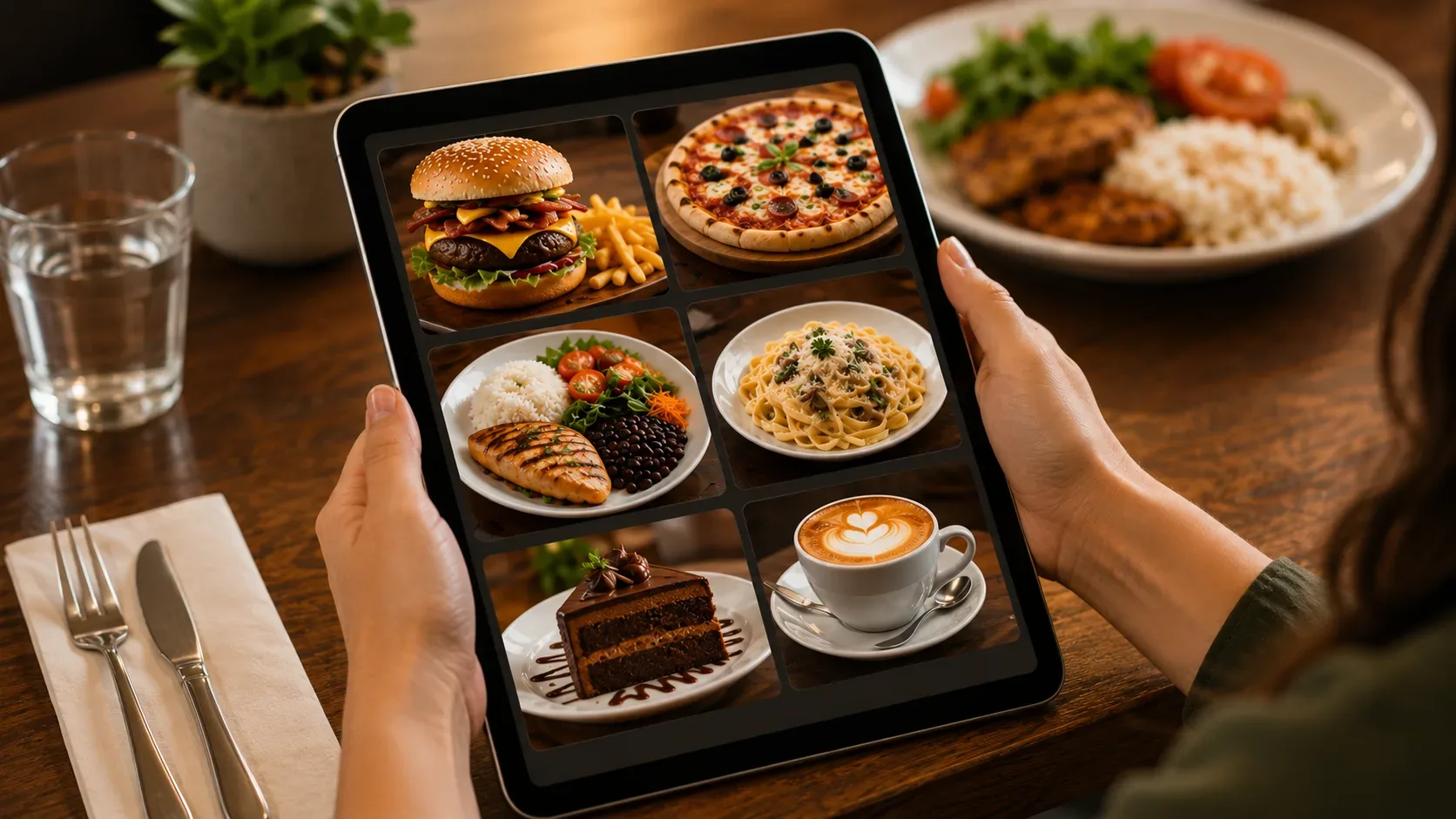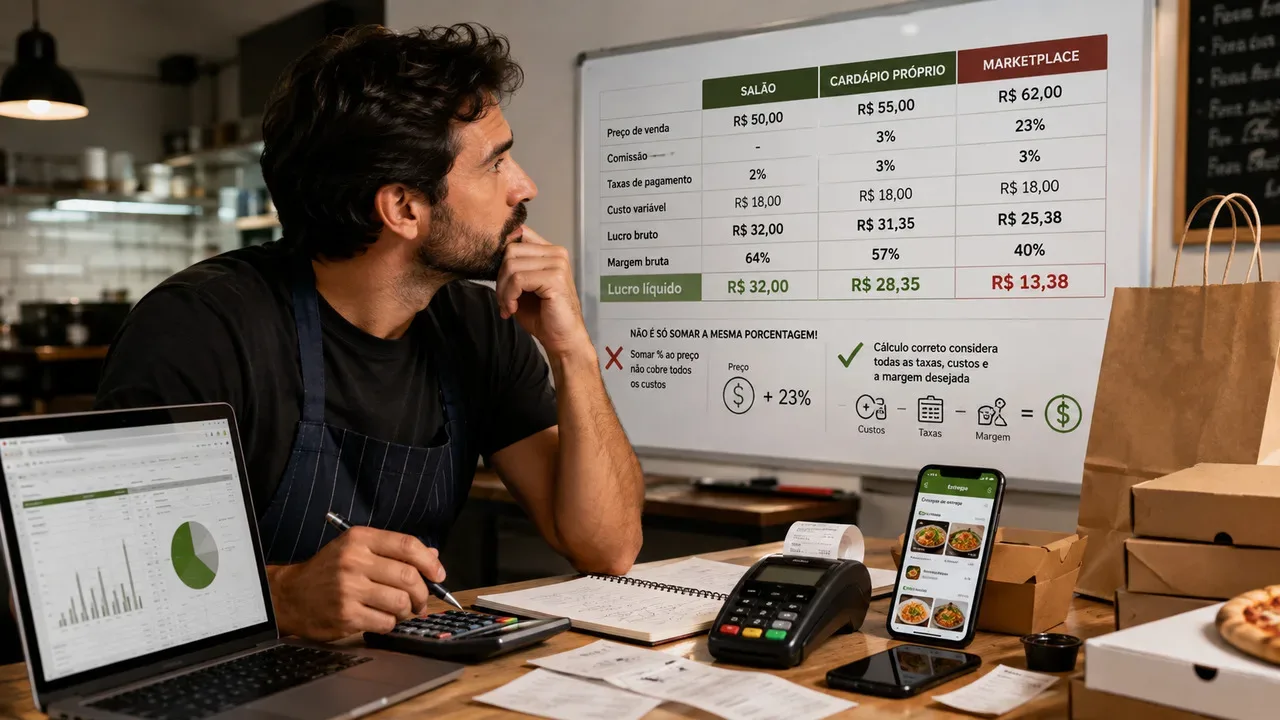
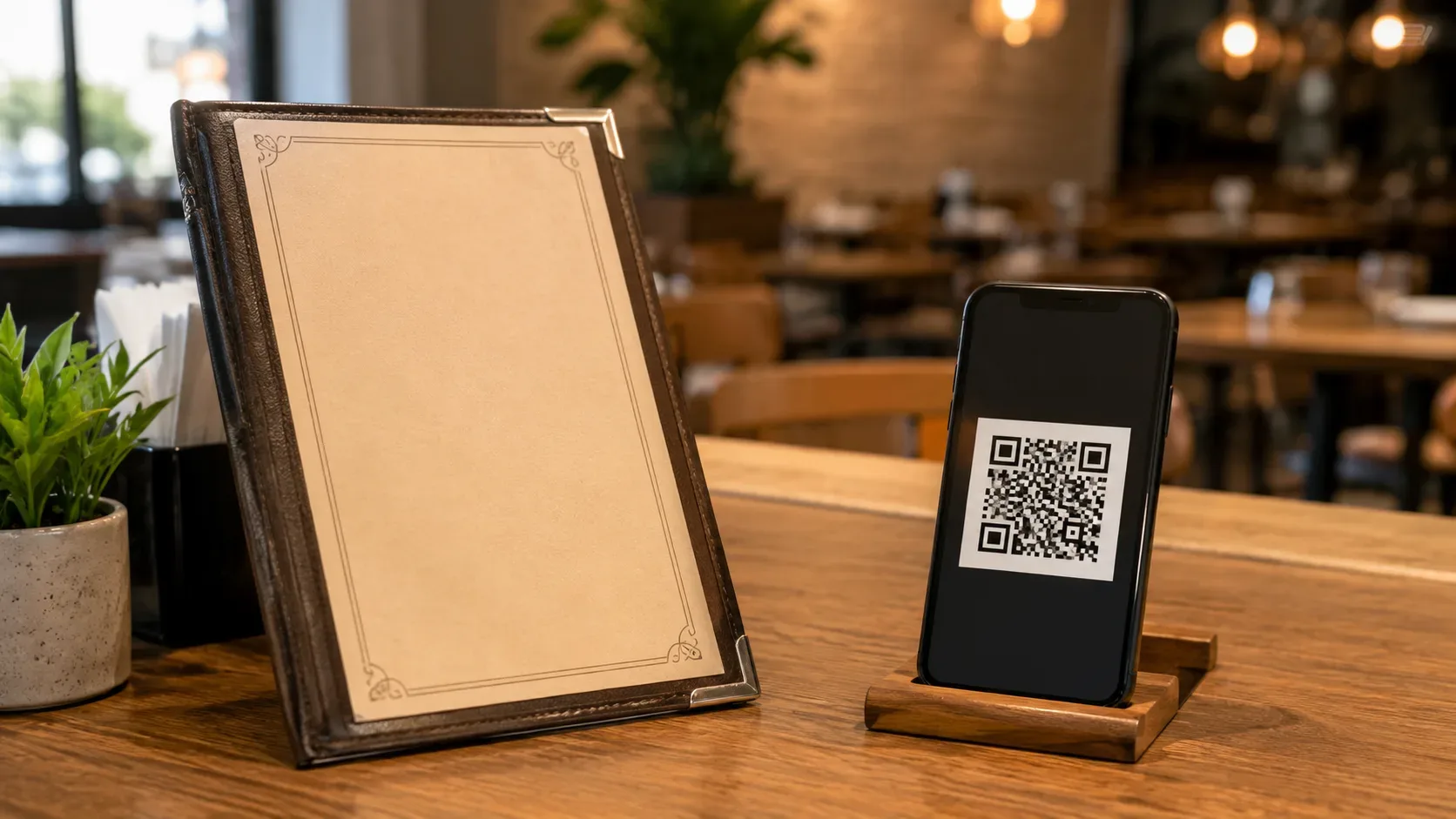
If the customer is unable or simply does not want to use the QR Code, what should be the alternative? For an establishment looking for a simple solution, the updated physical menu is the most robust starting point: it works without a cell phone, battery, camera, connection or registration and can coexist with the digital menu.
But there is an important distinction. Offering an alternative to the QR Code is a service decision and, in some locations, also a legal obligation. Making the digital menu accessible involves another problem. A printed menu does not automatically correct the barriers of an inaccessible website, just as an accessible website does not necessarily replace the physical medium required by a state or local law.
Therefore, there is no single legal answer for all of Brazil based on the norms consulted. The legislation applicable to the establishment's address needs to be checked before defining the definitive format.
In Santa Catarina, the digital menu cannot stand alone
In Santa Catarina, the answer is objective. State Law No. 19,688, of January 21, 2026, determines that bars, restaurants, cafeterias, hotels, motels and similar establishments that sell drinks, meals or snacks provide a physical menu or menu when using a digital menu or menu. The standard was published on January 22, 2026 and established a 90-day deadline for entry into force.
The definition adopted by the law itself also deserves attention: digital menu includes QR Code systems, tablets, totems, cell phones and similar electronic equipment. Therefore, in this context, lending a tablet to the customer does not transform service into a physical alternative.
Non-compliance with Santa Catarina law subjects those responsible to a fine under the terms of art. 57 of the Consumer Protection Code. The CDC provides that the administrative fine considers, among other factors, the severity of the infraction, the advantage obtained and the economic condition of the supplier.
This is a state rule. It should not be presented as a national obligation. Before applying the same reasoning in another state or municipality, it is necessary to check the legislation in force there.
Alternative to QR Code and digital accessibility are different problems
Imagine a restaurant that maintains ten impeccable printed menus, but whose digital menu only works with difficult gestures, text that cannot be enlarged or content that is incompatible with assistive technology. It resolved the availability of another medium, but not necessarily the accessibility of the digital channel.
The opposite can also happen: a web menu may have been developed in an accessible way and still depend on a device that the customer does not have, is out of battery or has decided not to use at that moment.
The Brazilian Inclusion Law considers technological barriers and barriers in communications and information among the obstacles that may limit the participation of people with disabilities. The same law establishes accessibility on websites maintained by companies with headquarters or commercial representation in Brazil, guaranteeing access to information available to people with disabilities.
For web content, WCAG 2.2, a W3C recommendation, brings together technical criteria designed to increase accessibility for people with different disabilities and on different devices. It is a technical reference for the digital channel; is not, in itself, an answer to the operational question of what to offer to those who will not use the QR Code.
In other words, there are two questions that must be addressed separately:
- Can the customer view the digital menu with accessibility?
- Does the customer have another suitable way to consult the menu without relying on this digital channel?
A well-planned solution answers both.
What the alternative really needs to solve
Exchanging the QR Code for an option that maintains the same technological dependence is of little use. The alternative should allow the customer to learn about items and prices without having to first resolve a device or connection issue.
This is why a physical menu tends to work well as a default alternative. It can be available on demand, as long as the quantity is sufficient so that ordering from the menu does not become a constant wait.
The exact format depends on the operation. A restaurant with table service may keep printed copies available for immediate delivery. A counter establishment can combine a readable display with supporting physical menus. If a local ordinance specifically requires a physical or printed menu, however, it is unwise to assume that a display, verbal explanation, or other format will satisfy the requirement without legal analysis of the applicable language.
The alternative also needs to preserve the quality of the information. The Consumer Protection Code ensures consumers have adequate and clear information about products and services, including characteristics, composition and price. Decree No. 5,903/2006, when regulating price information rules, requires criteria such as correctness, clarity, precision, conspicuousness and legibility.
This makes a common problem especially risky: keeping R$39 on the QR Code and R$36 on the printed menu because only one of the versions has been updated.
How to plan the alternative without creating two conflicting menus
The best implementation does not start with the graphics. It starts by defining how the information will be maintained.
1. Check the establishment's location rule
Before deciding that a menu on the wall, a shared tablet or some printed sheets will suffice, check the state and local laws applicable to the location of the unit.
Chains with operations in different states should not assume that the same legal procedure applies to all stores. The Santa Catarina rule demonstrates precisely why this check needs to be part of the process.
As this agenda involves consumer legislation and possible local regulations, the version intended for publication and any operational policy based on it must undergo human legal review.
2. Choose an option that really eliminates the need for the customer's device
If the purpose is to offer a way out for those who do not use the QR Code, the alternative should not require the person to:
- install an application;
- connect to Wi-Fi;
- enter personal data;
- use someone else's cell phone;
- photograph another screen or code;
- rely solely on one employee reciting the entire menu.
A physical menu avoids these dependencies in a simple way. The team's support continues to be useful, including for specific needs, but it should not serve as an excuse to transform information that should be available into a mandatory sequence of questions.
In Santa Catarina, this distinction is even more direct: tablet, totem and cell phone continue to be classified by law as digital forms.
3. Create a single source for prices and descriptions
Digital and physical may have different formats, but they should not be maintained as two independent bases.
Define where the establishment's official information is located and who is responsible for price changes, withdrawal of dishes, relevant ingredients and other data that appear on the menus. When a change occurs, the update must reach the affected channels within a defined process.
If the printed menu is updated less frequently, the operation must take this into account when deciding when a business change can take effect.
4. Make it easy to order the alternative
A physical menu that exists in stock, but only appears after insistence, does not offer the same experience as a naturally presented option.
The team can simply inform you that there is a digital and physical menu available, allowing you to choose without requiring justification. This also reduces the tendency to assume that a person will not use technology because of age, disability or any other characteristic.
The goal is to offer choice, not to classify the customer.
5. Keep taking care of the digital menu
Having a physical alternative does not make it acceptable to abandon the quality of the QR Code. If the menu leads to a company website, the accessibility obligation provided for in the Brazilian Inclusion Law continues to be a relevant point, and good web accessibility practices continue to be applicable to the digital project.
Here is the bridge with the content already published: how to test the digital menu that is still available. The article “Digital menu accessible on cell phones: 12 practical tests...” can be linked at this point, with the corresponding internal anchor, after the definitive URL is confirmed in the CMS.
Physical menu also needs to be usable
“Physical” is not an automatic synonym for “accessible.”
A menu with extremely small font, low contrast, excess information or damaged material can continue to create difficulties. Additionally, people with disabilities may need other resources and adaptations depending on their needs and applicable legislation.
The Brazilian Inclusion Law ensures service in services intended for the public with the provision of human and technological resources that allow for equal conditions, in addition to access to information and accessible communication resources.
Therefore, planning does not need to choose between “accessible digital” and “physical”. The most failure-resistant solution is to work in layers: keep the digital channel well built, offer a suitable alternative medium, and prepare the team to help when a specific need cannot be solved by the available formats.
What should not be called an alternative
Some solutions just move the barrier.
A larger printed QR Code is still a QR Code. Offering Wi-Fi resolves connection, but it does not resolve the absence of a device, battery, difficulty in use or the decision not to use a cell phone. A tablet provided by the house eliminates the need for a personal device, but remains a digital channel — and, in Santa Catarina, Law No. 19,688 itself includes tablets among the electronic equipment covered by the definition of digital menu.
Verbally explaining the menu can also be an important support, but it is different from allowing the customer to independently consult all available items and prices.
The useful question, therefore, is not “do we have any way out if the QR fails?”. It is: can the person consult the menu and make their decision without depending on the QR Code and without receiving inferior information to that offered to other customers?
A simple model for operation
For many establishments, an initial configuration can be objective: keep the QR Code for those who prefer cell phones, keep physical copies updated in a number compatible with the service and guide the team to offer both options without embarrassment.
Afterwards, three controls prevent the solution from deteriorating: periodically checking whether prices match between channels, testing the functioning and accessibility of the digital menu and reviewing local regulations whenever a unit opens or a relevant change in legislation.
In states or municipalities that establish specific requirements, the operation must be adapted to the applicable standard. In Santa Catarina, for example, the physical environment is not just a choice of experience: it is required when the establishment uses a digital menu.
The QR Code can continue to be convenient. The problem begins when the convenience of the operation becomes a condition for the customer to be able to discover what they can order and how much they will pay.