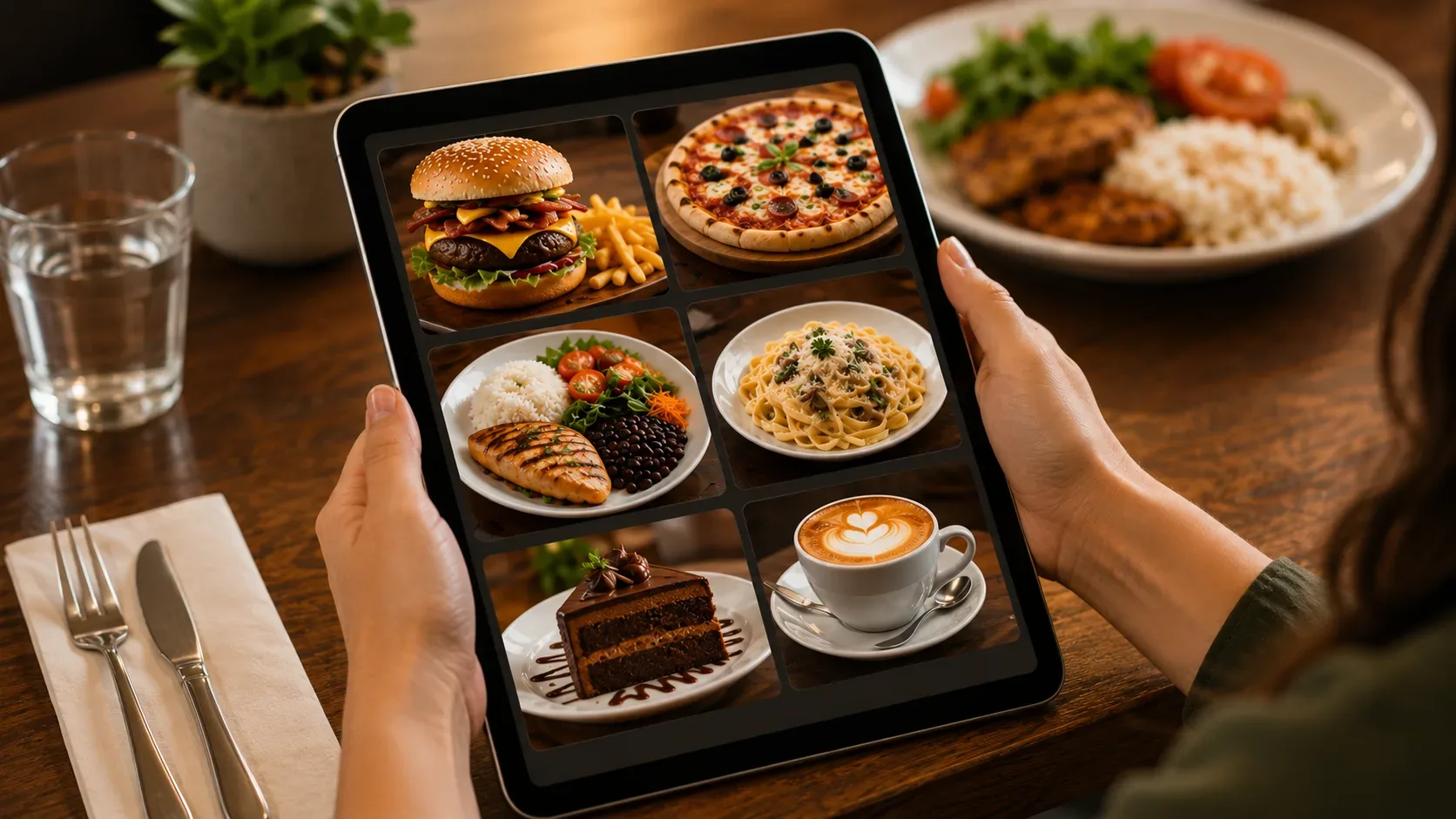
A product description on the menu does not need to turn each dish into an advertisement. It needs to allow the customer to understand what they will receive, in what quantity, what is included and what choices they can make.
This focus on information also makes sense in light of menu research. In a study of 1,208 consumers in Australia, the combination of ingredients emerged as the most influential attribute when choosing items in casual and higher-end restaurants. Sufficient portion size has also gained importance in certain consumer groups.
This doesn't mean that a detailed description will automatically increase sales. A meta-analysis published in the International Journal of Hospitality Management, bringing together 53 studies and 16,522 participants, found effects of menu design elements on consumer behavior, but showed an important difference: for item descriptions, the effects appeared in measures such as attitude and intention, while the aggregate effect on actual purchases was not statistically significant. The authors also observed greater effects in the laboratory and with simulated menus than in real situations.
Therefore, a safer and more useful objective is another: reducing doubts when choosing.
What a menu description needs to answer
Imagine someone who has never seen the dish and does not know the names used by the establishment. By reading the item, that person should be able to form a reasonable expectation about the request.
The description can follow this order:
- Clear item name. If the product has a creative name, add identification that says what it is. “Emperor” tells little; “Imperador — beef burger with bacon” already creates a reference.
- What makes up the product. Prioritize ingredients and components that really affect the choice. It is not necessary to reproduce an entire technical sheet.
- Relevant preparation or difference. Inform when it makes a difference to know that something is grilled, breaded, roasted, smoked, raw, stuffed or prepared in another specific way.
- Size or portion. When there is a reliable standard, provide weight, volume, diameter, number of units or yield for sharing.
- Side dishes included. Differentiate between what is already part of the order and what is sold separately.
- Options and add-ons. Show available choices, substitutions and relevant add-ons, making it clear when additional charges apply.
The order helps because it places the information necessary to recognize the product first and then the configuration details. It is not necessary to fill in the six points in all items. An espresso may need a name and volume; a pizza to share probably requires more information.
A survey of consumers in four European countries about information on dining out also found interest in greater transparency and knowledge about the contents of dishes, although preferences on how to present this information varied between groups. The practical application is simple: there is no universal amount of text, but hiding useful information doesn't help either.
Creative name should not force the customer to guess
One of the easiest mistakes to fix is using only internal, themed or promotional names.
“Explosão da Casa”, “Supremo”, “Chef’s Special” and “Experiência Tropical” can function as names, but do not replace product identification. If the reader needs to open a photo or call someone to find out if it is a sandwich, a dessert or a drink, there is a lack of information.
One solution is to keep the name and add the category or main element:
Supremo da Casa — breaded chicken sandwich with cheese and spicy sauce.
This way, the personality of the menu remains without turning the choice into an exercise in guesswork.
Inform the ingredients that change the decision
It is not necessary to list each spice used in the kitchen. The criteria is: can this component make someone choose or avoid the item?
In a burger, for example, type of protein, cheese, bacon, onion, sauce and other main components usually help form expectations of the product. On a pizza, toppings, cheese, sauce and striking ingredients tend to be more useful than a string of adjectives.
This is in line with the study by Peters and Remaud, in which the combination of ingredients had great weight in the participants' choice. The study itself, however, was carried out with Australian consumers and should not be treated as a universal rule for any public or restaurant.
Lesser-known culinary terms also deserve context. If the audience may not know what an ingredient, sauce, or technique is, a short explanation is often more helpful than assuming familiarity.
Portion needs to be concrete when size matters
“Big”, “generous” and “well served” depend on the reader’s reference.
When the operation can maintain a standard, prefer verifiable measurements: 300 ml, 500 g, eight units, 35 cm or another specification compatible with the product. In shareable items, the number of people can complement the measure if the establishment has a real standard to support this indication.
The important thing is not to invent precision. If the weight varies a lot after preparation or if “serves three people” is just a guess, it is better to adjust the way you inform than to publish a number that creates an expectation that is difficult to meet.
Separate what is included from what costs separately
“Filet with side dishes” still leaves an essential question: which ones?
When rice, beans and salad are part of the dish, say so. When the customer chooses two of five side dishes, explain the rule. If potatoes, extra sauce or additional protein are priced separately, they should not appear to be included in the main description.
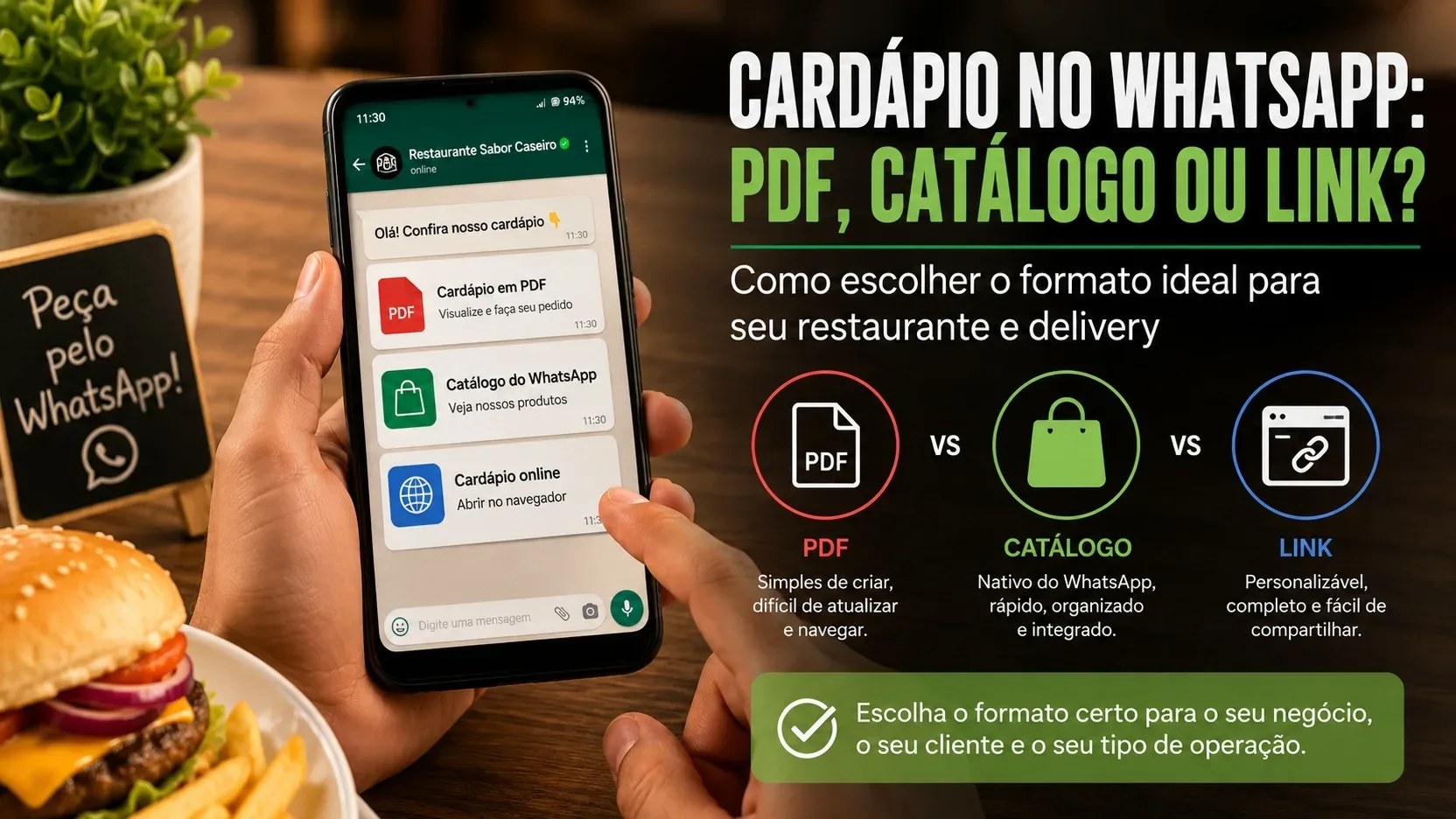
This distinction becomes even more important in digital menus and orders without direct service, because the page itself needs to carry a larger part of the explanation.
10 examples of weak description and better description
The examples below are fictitious and only serve to show the structure of the text. Weights, volumes, ingredients, accompaniments and yields must be replaced by the actual data from the technical sheet and operation.
- Burger
Weak: “X-Bacon Special.”
Best: “160 g beef burger on brioche bun, with cheese, crispy bacon, caramelized onion and house sauce. Served with fries.” - Pizza
Weak: “House Pepperoni.”
Best: “35 cm pizza with tomato sauce, mozzarella, sliced pepperoni, onion and oregano. Cut into 8 slices; serves 2 to 3 people according to house standards.” - Dish made
Weak: “Chicken Executive.”
Best: “Grilled chicken fillet with rice, beans, fries and salad of the day. Individual dish.” - Coffee
Weak: “Special cappuccino.”
Best: “180 ml drink prepared with espresso, steamed milk and milk foam. Optional cinnamon.” - Dessert
Weak: “Incredible brownie.”
Best: “Chocolate brownie served warm, accompanied by a scoop of vanilla ice cream and chocolate sauce.” - Salad
Weak: “Complete Caesar.”
Best: “Lettuce, grilled chicken, croutons, parmesan and Caesar dressing. Dressing served separately if requested.” - Açaí
Weak: “Complete açaí 500 ml.”
Best: “500 ml glass of açaí accompanied by banana and granola. Choose up to two complements from the available options.” - Tapioca
Weak: “Cheese tapioca.”
Best: “Tapioca stuffed with coalho cheese, prepared on the grill. Option to add tomato or oregano.” - Sushi combo
Weak: “Special combo — 20 pieces.”
Best: “20 pieces: 8 salmon uramakis, 4 cucumber hossomakis, 4 raw salmon niguiris and 4 hot rolls. Served with soy sauce, ginger and wasabi.” - Pasta
Weak: “House premium pasta.”
Best: “Fettuccine with creamy parmesan sauce, finished with sautéed mushrooms. Individual portion.”
The pattern repeats itself: the better version does not depend on “delicious”, “special”, “premium” or “irresistible” to explain the product. It exchanges generic adjectives for information that helps visualize the request.
Adjective can complement information, not replace it
A description can be appetizing. The problem arises when the text tries to arouse desire without responding to the basics.
“Crispy”, “creamy”, “smoked” and “spicy”, for example, can inform texture, preparation or flavor. Expressions such as “the best in the city”, “incomparable flavor” or “unforgettable experience” add little if they are not accompanied by concrete information.
The literature on menu design itself recommends caution with excessive commercial promises. The meta-analysis by Ip and Chark found considerable heterogeneity between studies and highlighted that results obtained in experimental environments may overestimate effects observed in real situations. Therefore, improving the description should be treated first as an improvement in communication, and not as a guarantee of conversion.
Information about dietary restrictions requires another level of care
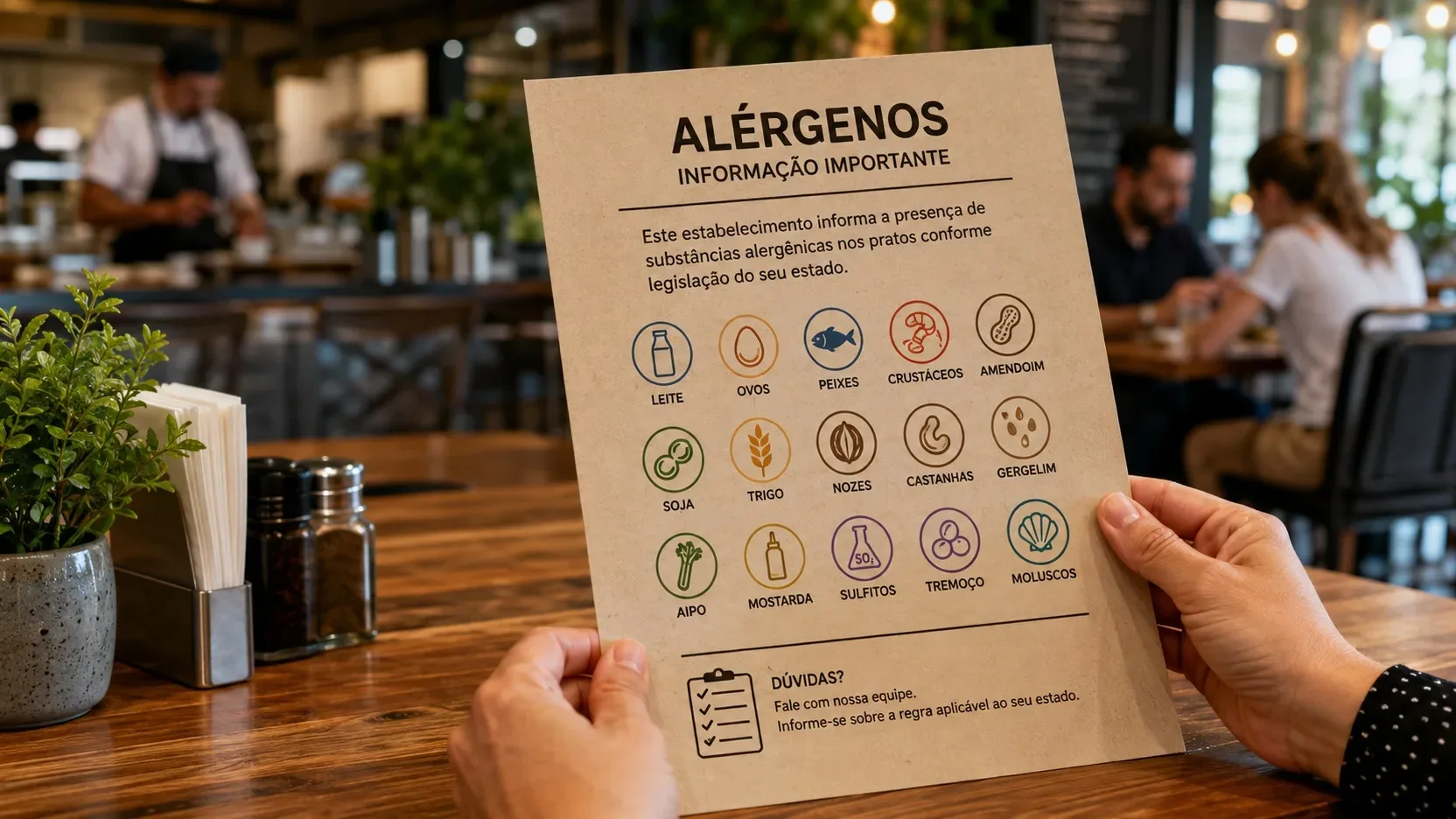
Expressions such as “gluten-free”, “dairy-free”, “vegan” or allergen-related statements should not be inserted just because they appear commercially useful. The information must correspond to the ingredients, preparation and actual operating conditions.
The Anvisa guidance consulted for this issue specifically deals with the labeling of packaged foods and should not automatically be transformed into a general rule for restaurant menus. The document, however, reinforces a relevant point for safety: people with allergies depend on correct and clear information to manage food risk.
When there are allegations of this type, the commercial description does not replace control procedures, updated technical data sheets and professional guidance appropriate to the operation.
The description must accompany the technical sheet
A good text stops being good when the dish changes and the description remains old.
Cheese change, side dish removal, size change, sauce change or new additions rule need to be on the menu. Therefore, the product text must be linked to the operation update process, and not be treated as a marketing piece written once.
It also helps to separate fields whenever the system allows. The description can explain the product, while size, mandatory and additional choices are in their own selectors. This avoids turning a paragraph into a configuration manual.
Before publishing, read each item as someone who has never placed an order at the establishment. If you still need to ask what's coming, how much is coming, what's included, or what choices are available, you're missing important information.